How I Sold My First Artwork in the Netherlands
The first time I ever sold one of my artworks was in the Netherlands. I was about twenty-four years old. I had just graduated with a Fine Arts degree and had spent three months working as a construction labourer in southern Tenerife. Yes, my dark side—I also helped pour concrete over these islands... but that's another story.
With the money I had saved, I moved to London to learn English. After a few months there, my dear soul-sisters Marta, Isabel and I heard about a travelling theatre that toured the Netherlands every summer and was usually looking for staff. Without thinking twice, we packed our backpacks, filled our hearts with excitement and headed for that country built on water. When we arrived, we discovered there were no jobs available after all. A little disappointed, we lay down in a park next to Theater De Parade. There we were, the three of us, juggling, passing the time and trying to decide what to do next, with that carefree attitude towards uncertainty that I sometimes wish I could recover.
Then Ruben appeared. One of those people who unexpectedly crosses your path and quietly changes the direction of your life. He told us about Mobiele Zwerfarchitectuur, an artistic and social project working with people experiencing homelessness alongside the theatre, and invited us to join. The initiative was connected to an art centre in Rotterdam and a church with a deeply compassionate approach to social exclusion. Its aim was to bring the reality of homelessness closer to Dutch society through art. Small houses had been built from wooden pallets and recycled materials, where artists and people without a home lived together, created together and shared their daily lives.
We said yes.
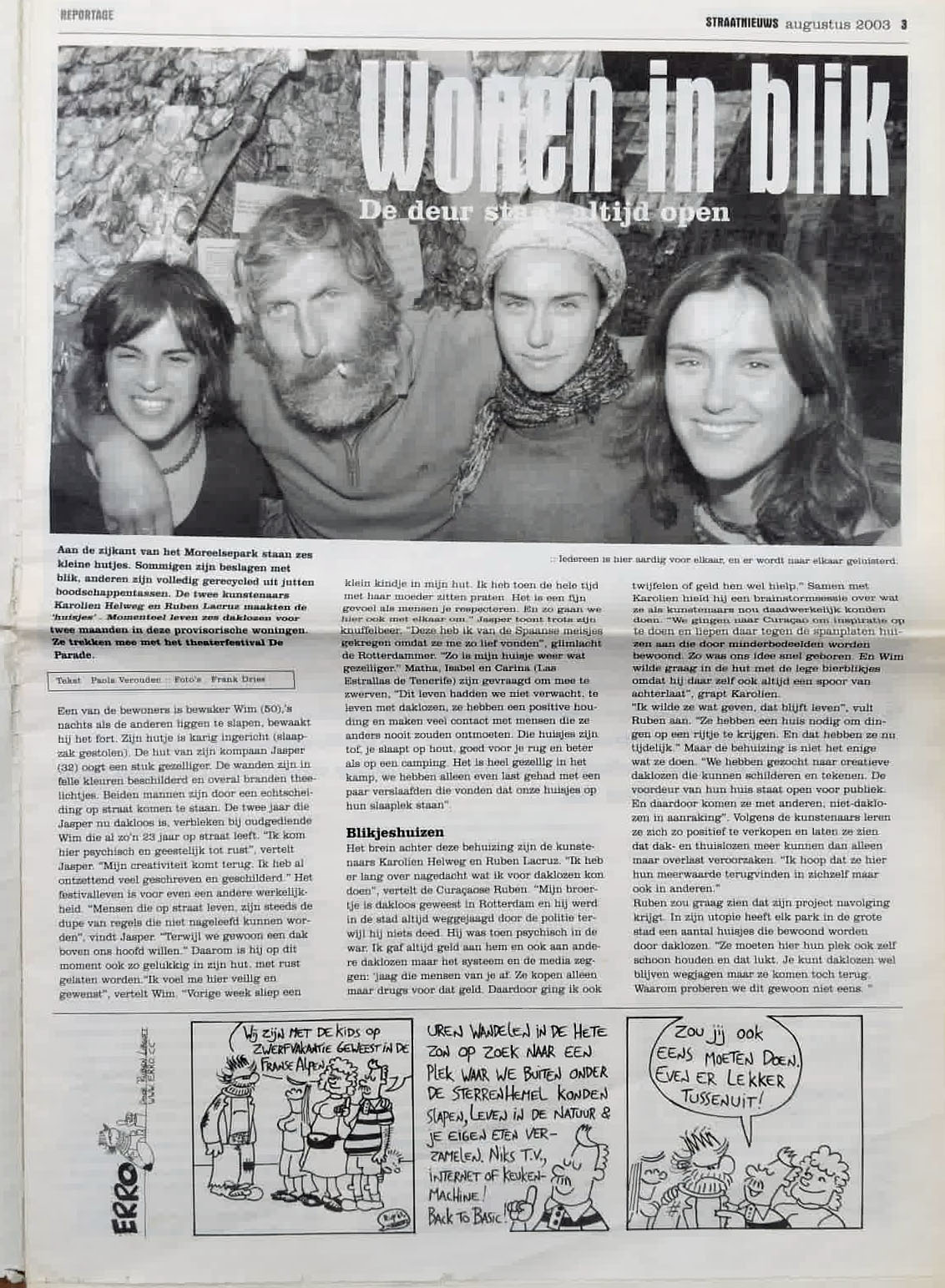
Each of us moved into one of those tiny houses, and for almost three months we became part of that extraordinary project. It wasn't always easy. Life on the streets has its own rules, its own complexities and its own wounds. There were conflicts, violence, drug dealing and difficult situations. But there was also humanity, unexpected friendships and lessons I could never have learned at university. It was there, in that Dutch park, drawing and sharing space with people whose lives had taken very different paths, that I sold my very first drawing.
Five euros.
It might seem like a tiny sale, but for me it changed everything. It wasn't about the money. It was the moment I realised that something created with my own hands could move another person enough for them to want to take it home.
Since then, I've painted a great deal. Life has taken many turns. I've lived in different countries, continued learning, filled countless sketchbooks and created hundreds of artworks. Little by little, my path as an artist began to take shape.
Today, my paintings live in homes across the Canary Islands, Europe, Costa Rica, the United States and other parts of the world. Every artwork that finds a new home is much more than a sale; it is a gesture of trust, a bridge between the way I see nature and the people who choose to live with one of my paintings.
Looking back now, I realise that the seed of everything I do today began to grow there. That was where I understood that art wasn't only about creating beauty. It could also create connection, community, transformation and a deeper relationship with nature. From that moment on, I could never separate one from the other.
Perhaps that's why, every time someone walks into EcoGalería ArteCarina in Puerto de la Cruz, Tenerife, pauses in front of one of my paintings and finally decides to take it home, I return for a moment to that park in the Netherlands. The difference is that today, instead of a tiny house built from wooden pallets, I have a creative space built on more than twenty years of dedication, the support of my family, perseverance, thousands of hours of work... and a generous dose of stubborn Canary determination.
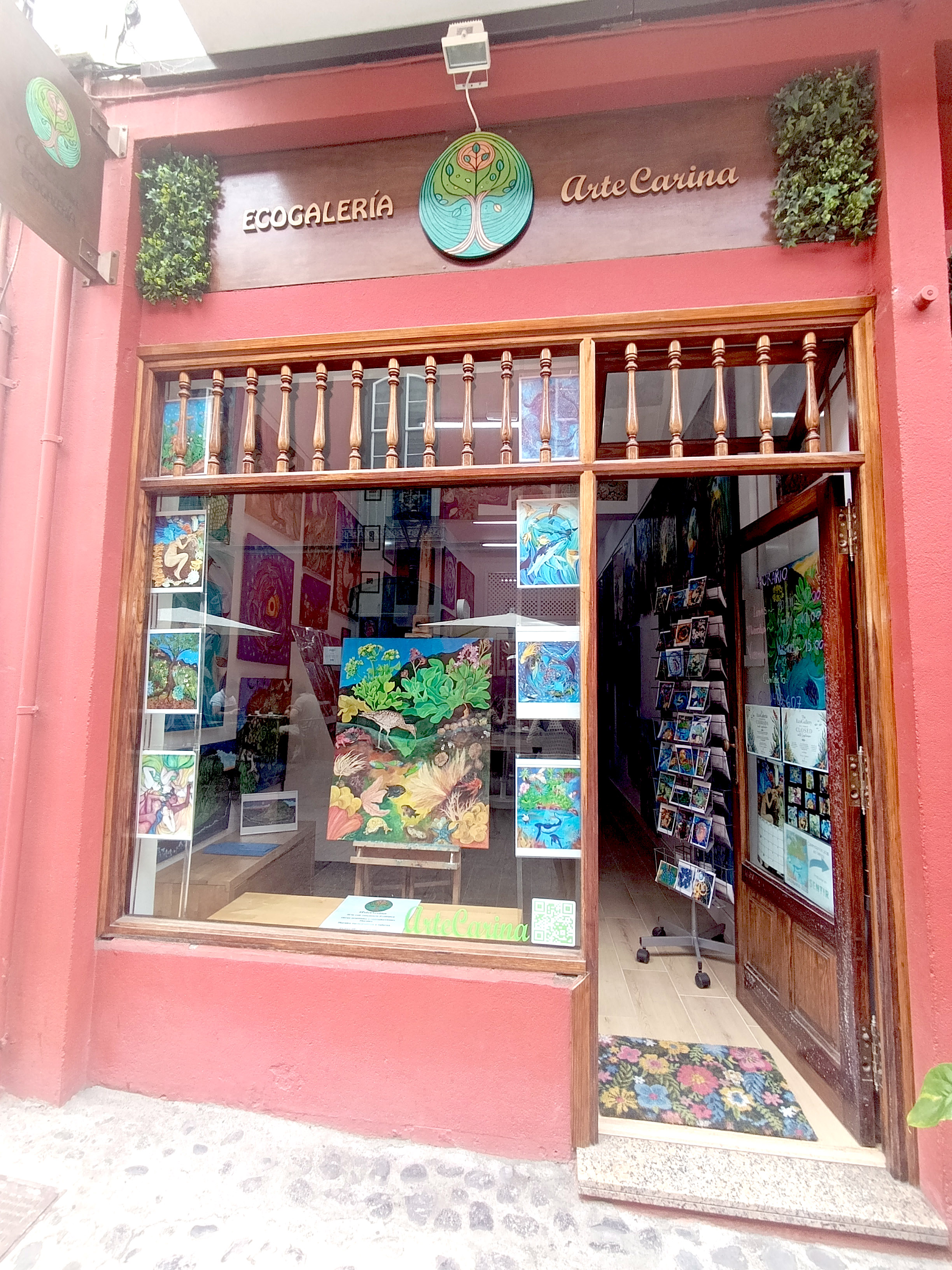
There isn't a single day that I don't feel grateful. Grateful to every person who, over the past twenty years, has supported my work by collecting one of my original paintings, a print, a calendar or one of the many small creations that leave my studio.
Because of them, I can continue dedicating my life to creating, researching and sharing art that is deeply connected to nature, biodiversity and people.